
Emily Bohr

EMILY BOHR

Outreach Specialist, Office of Environmental and Energy Coordination, Fairfax County Government

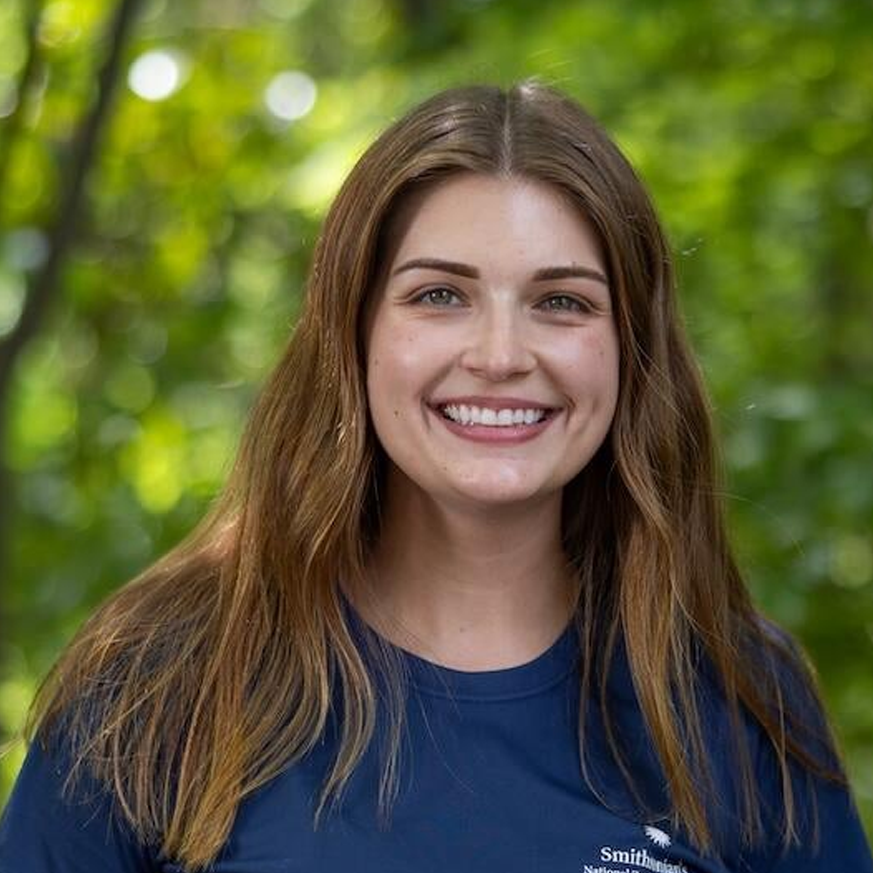
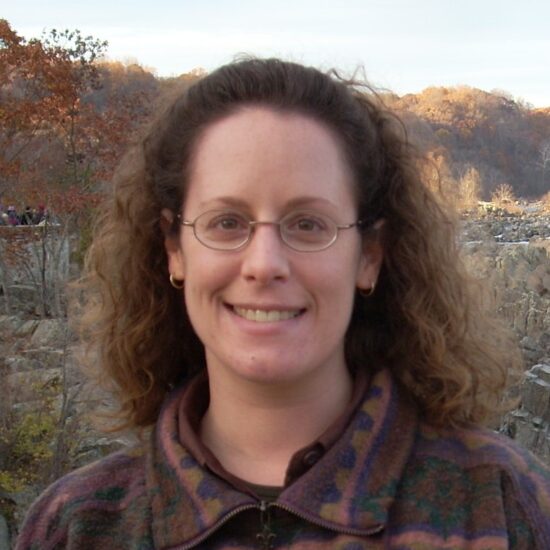
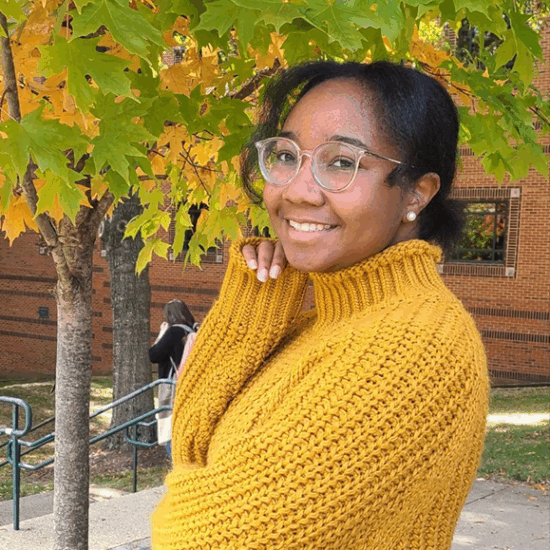
Emily Bohr holds a degree in Environmental and Sustainability Studies from George Mason University and attended the Smithsonian-Mason School of Conservation (Class of 2021).  Since 2022, she has served as outreach specialist for Fairfax County’s Office of Environmental and Energy Coordination, connecting the Fairfax community with ways to take climate action through creative digital storytelling and community events and making local environmental issues real and relatable for residents of all ages and abilities. She resides in Arlington where she enjoys crocheting and birdwatching. 

EMILY BOHR

Outreach Specialist, Office of Environmental and Energy Coordination, Fairfax County Government

Emily Bohr holds a degree in Environmental and Sustainability Studies from George Mason University and attended the Smithsonian-Mason School of Conservation (Class of 2021).  Since 2022, she has served as outreach specialist for Fairfax County’s Office of Environmental and Energy Coordination, connecting the Fairfax community with ways to take climate action through creative digital storytelling and community events and making local environmental issues real and relatable for residents of all ages and abilities. She resides in Arlington where she enjoys crocheting and birdwatching. 

Ashley Fortner

ASHLEY FORTNER

Elephant Keeper, Smithsonian's National Zoological Park

Ashley Fortner is an elephant keeper at the Smithsonian’s National Zoo and Conservation Biology Institute, where she works with Asian elephants and contributes to conservation-focused animal care and research. A 2017 graduate of George Mason University and alumna of the Smithsonian-Mason School of Conservation, Ashley has helped mentor students, support behavioral research projects, and care for the Zoo’s elephant herd, including the Smithsonian’s first elephant calf born in nearly 25 years. Her work focuses on conservation, animal welfare, and inspiring the next generation of environmental leaders

ASHLEY FORTNER

Elephant Keeper, Smithsonian's National Zoo

Ashley Fortner is an elephant keeper at the Smithsonian’s National Zoo and Conservation Biology Institute, where she works with Asian elephants and contributes to conservation-focused animal care and research. A 2017 graduate of George Mason University and alumna of the Smithsonian-Mason School of Conservation, Ashley has helped mentor students, support behavioral research projects, and care for the Zoo’s elephant herd, including the Smithsonian’s first elephant calf born in nearly 25 years. Her work focuses on conservation, animal welfare, and inspiring the next generation of environmental leaders

Jordan Eccles

JORDAN ECCLES

Deputy Director for Innovation, Executive Office of the President - Council on Environmental Quality

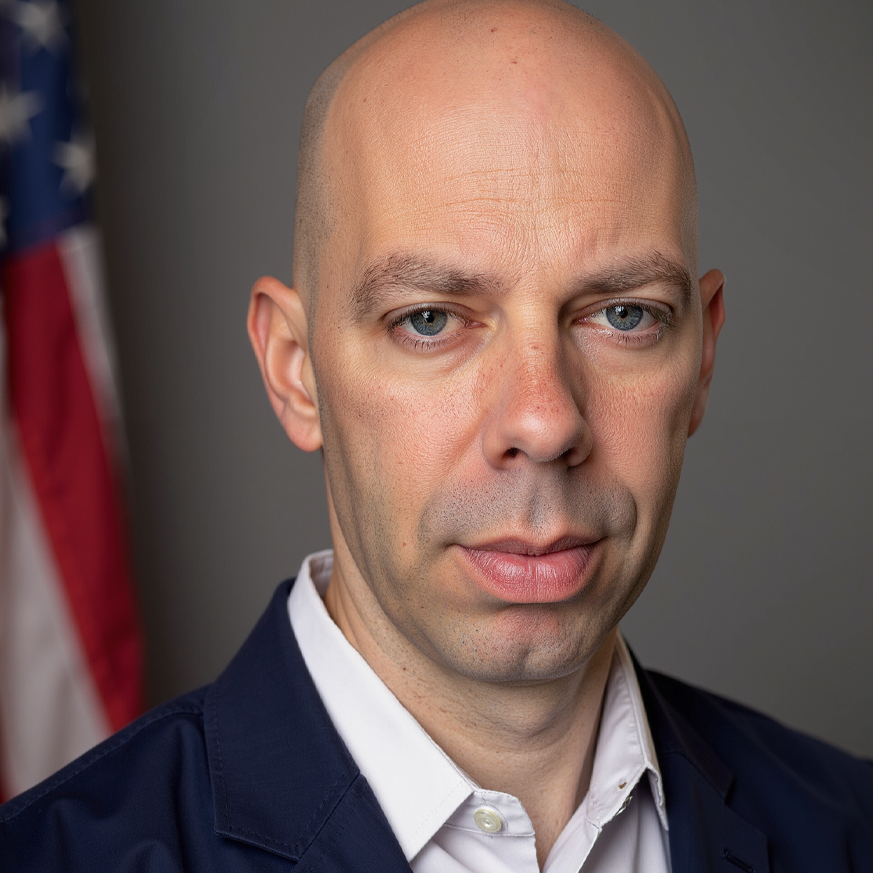
Jordan Eccles is a Presidential Innovation Fellow working with the Executive Office of the President – Council on Environmental Quality as Deputy Director for Innovation.  In this role, Dr. Eccles brings best practices in digital strategy, AI and data analytics, and mission-driven outcomes to infrastructure planning and build-out.  He is a technology and data science professional with over a decade of experience working to transform processes and tools in the Department of Defense, most recently working with the Deputy Assistant Secretary of the Air Force for Operational Energy to develop approaches for maximizing combat capability by optimizing fuel use. In this role, he pioneered a software and productivity approach to fuel logistics, delivering programs saving tens of millions of dollars in fuel costs wasted on non-mission inefficiencies. Dr. Eccles previously supported the Air Force Encroachment Management and Community Partnership programs, preventing impacts to mission operations at over forty installations. Prior to working with the Air Force, he helped found a startup working in credit card security and served as its Chief Technology Officer and worked as a postdoctoral associate and adjunct professor at Duke University, researching topics in the energy and environment space. Dr. Eccles also served as a Surface Warfare Officer in the US Navy and a high school science and math teacher in Raleigh, NC.

JORDAN ECCLES

Deputy Director for Innovation, Executive Office of the President - Council on Environmental Quality

Jordan Eccles is a Presidential Innovation Fellow working with the Executive Office of the President – Council on Environmental Quality as Deputy Director for Innovation.  In this role, Dr. Eccles brings best practices in digital strategy, AI and data analytics, and mission-driven outcomes to infrastructure planning and build-out.  He is a technology and data science professional with over a decade of experience working to transform processes and tools in the Department of Defense, most recently working with the Deputy Assistant Secretary of the Air Force for Operational Energy to develop approaches for maximizing combat capability by optimizing fuel use. In this role, he pioneered a software and productivity approach to fuel logistics, delivering programs saving tens of millions of dollars in fuel costs wasted on non-mission inefficiencies. Dr. Eccles previously supported the Air Force Encroachment Management and Community Partnership programs, preventing impacts to mission operations at over forty installations. Prior to working with the Air Force, he helped found a startup working in credit card security and served as its Chief Technology Officer and worked as a postdoctoral associate and adjunct professor at Duke University, researching topics in the energy and environment space. Dr. Eccles also served as a Surface Warfare Officer in the US Navy and a high school science and math teacher in Raleigh, NC.

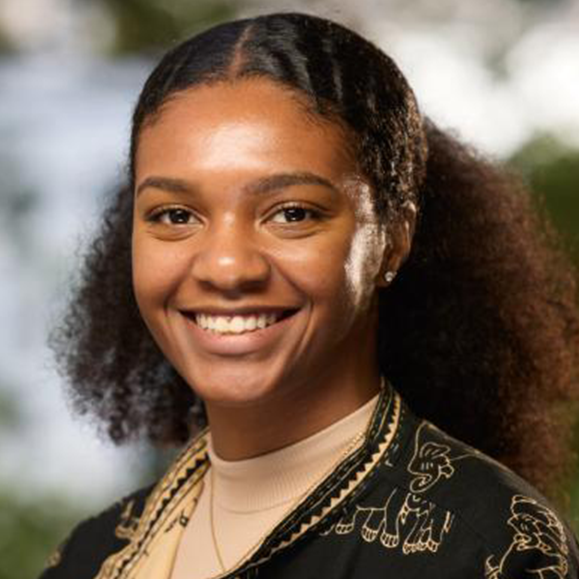
Mindy Babitz

MINDY BABITZ

Data Management Specialist, Smithsonian's National Zoo and Conservation Biology Institute

Mindy is a data management specialist working in the registrar’s office at the Smithsonian’s National Zoo and Conservation Biology Institute, where she helps manage records on all of the animals and biomaterials in NZCBI’s care. She previously worked as an animal caregiver for more than two decades with a variety of species including bears, big cats, primates, and small carnivores. With a Ph.D. in psychology focused on animal behavior and cognition, she has conducted behavioral and cognitive research with bears in an effort to improve their management in zoos. Mindy consults with a variety of NGOs, accredited and non-accredited zoos around the world, and state animal law enforcement to help assess animal welfare issues and educate caregivers on proper husbandry for bears and other species. Mindy is the vice president of the Bear Care Group, an international non-profit whose mission is to foster improvements in global bear welfare. She is also the studbook keeper for the Association of Zoos and Aquariums (AZA) sun bear population, and a member of AZA’s Bear Taxon Advisory Group Steering Committee.
MINDY BABITZ

Data Management Specialist, Smithsonian's National Zoo and Conservation Biology Institute

Mindy is a data management specialist working in the registrar’s office at the Smithsonian’s National Zoo and Conservation Biology Institute, where she helps manage records on all of the animals and biomaterials in NZCBI’s care. She previously worked as an animal caregiver for more than two decades with a variety of species including bears, big cats, primates, and small carnivores. With a Ph.D. in psychology focused on animal behavior and cognition, she has conducted behavioral and cognitive research with bears in an effort to improve their management in zoos. Mindy consults with a variety of NGOs, accredited and non-accredited zoos around the world, and state animal law enforcement to help assess animal welfare issues and educate caregivers on proper husbandry for bears and other species. Mindy is the vice president of the Bear Care Group, an international non-profit whose mission is to foster improvements in global bear welfare. She is also the studbook keeper for the Association of Zoos and Aquariums (AZA) sun bear population, and a member of AZA’s Bear Taxon Advisory Group Steering Committee.

Aliyah Griffith

ALIYAH GRIFFITH

Marine Biologist, National Geographic

Aliyah Griffith Is a marine biologist and the CEO and Founder of Mahogany Mermaids, a nonprofit organization dedicated to inspiring children of color to engage in aquatic sciences. As a PhD Candidate in Marine Science, her work focuses on coral reef ecosystems, integrating scuba diving, satellite imagery and remote-operated vehicles (ROVs) to study reef resilience and management. Her research experiences have taken her from the reefs of Moorea, French Polynesia to the Caribbean coastlines of Barbados, and has been published in Integrative and Comparative Biology and Reef Encounter.


In 2022, she became the first African American to earn a graduate degree in marine science from the University of North Carolina at Chapel Hill. Her current work on reef management has earned recognition and support from organizations such as the National Geographic Society, the American Museum of Natural History and the International Coral Reef Society. As a National Geographic Explorer, Aliyah has contributed to promotional materials for The Little Mermaid and hosted a screening for families connected to her nonprofit. She also represented National Geographic during ABC Storyteller’s Spotlight at Essence Fest 2023. Passionate about inspiring future generations, she has authored a children’s book, My Secret Mermaid, showcasing careers in marine science and ocean exploration.

ALIYAH GRIFFITH

Marine Biologist, National Geographic

Aliyah Griffith Is a marine biologist and the CEO and Founder of Mahogany Mermaids, a nonprofit organization dedicated to inspiring children of color to engage in aquatic sciences. As a PhD Candidate in Marine Science, her work focuses on coral reef ecosystems, integrating scuba diving, satellite imagery and remote-operated vehicles (ROVs) to study reef resilience and management. Her research experiences have taken her from the reefs of Moorea, French Polynesia to the Caribbean coastlines of Barbados, and has been published in Integrative and Comparative Biology and Reef Encounter.

In 2022, she became the first African American to earn a graduate degree in marine science from the University of North Carolina at Chapel Hill. Her current work on reef management has earned recognition and support from organizations such as the National Geographic Society, the American Museum of Natural History and the International Coral Reef Society. As a National Geographic Explorer, Aliyah has contributed to promotional materials for The Little Mermaid and hosted a screening for families connected to her nonprofit. She also represented National Geographic during ABC Storyteller’s Spotlight at Essence Fest 2023. Passionate about inspiring future generations, she has authored a children’s book, My Secret Mermaid, showcasing careers in marine science and ocean exploration.

Jason O’Bryhim

JASON O'BRYHIM

National Oceanic and Atmospheric Administration (NOAA) Contractor

Jason is currently a contractor with the National Oceanic and Atmospheric Administration (NOAA). Previously he was a Research Professional at the University of Georgia Savannah River Ecology Laboratory where he managed projects and was co-principal investigator for multiple research. Jason earned a PhD at George Mason University with a research focus on the shark trade in Costa Rica.

JASON O'BRYHIM

National Oceanic and Atmospheric Administration (NOAA) Contractor

Jason is currently a contractor with the National Oceanic and Atmospheric Administration (NOAA). Previously he was a Research Professional at the University of Georgia Savannah River Ecology Laboratory where he managed projects and was co-principal investigator for multiple research. Jason earned a PhD at George Mason University with a research focus on the shark trade in Costa Rica.

Diego Valderrama

DIEGO VALDERRAMA

Assistant Professor and Undergraduate Advisor, George Mason University

The major goal of Dr. Valderrama’s research program is to improve the environmental and economic management of living marine resources through the application of methods derived from economic and social science. His work is largely interdisciplinary and draws from disciplines as varied as marine biology, fish ecology, and natural resource economics. Dr. Valderrama has examined the environmental and economic performance of a number of fisheries in the U.S. and Latin America (Atlantic sea scallops, salmon, shrimp). In addition, he has investigated the production and environmental economics of a broad range of aquaculture species (shrimp, tilapia, catfish, hybrid striped bass, scallops, seaweed) and culture systems around the world. His research has also attempted to measure the potential of aquaculture to improve the socio-economic conditions of coastal communities affected by declining fisheries in developing countries. The accomplishment of marine conservation objectives through the development of sustainable aquaculture industries is another long-standing research interest. Dr. Valderrama has implemented his research program through academic institutions in the U.S. and Colombia, and also as an Aquaculture Officer for the Food and Agriculture Organization of the United Nations (FAO).

DIEGO VALDERRAMA

Assistant Professor and Undergraduate Advisor, George Mason University

The major goal of Dr. Valderrama’s research program is to improve the environmental and economic management of living marine resources through the application of methods derived from economic and social science. His work is largely interdisciplinary and draws from disciplines as varied as marine biology, fish ecology, and natural resource economics. Dr. Valderrama has examined the environmental and economic performance of a number of fisheries in the U.S. and Latin America (Atlantic sea scallops, salmon, shrimp). In addition, he has investigated the production and environmental economics of a broad range of aquaculture species (shrimp, tilapia, catfish, hybrid striped bass, scallops, seaweed) and culture systems around the world. His research has also attempted to measure the potential of aquaculture to improve the socio-economic conditions of coastal communities affected by declining fisheries in developing countries. The accomplishment of marine conservation objectives through the development of sustainable aquaculture industries is another long-standing research interest. Dr. Valderrama has implemented his research program through academic institutions in the U.S. and Colombia, and also as an Aquaculture Officer for the Food and Agriculture Organization of the United Nations (FAO).

Terrionna Cuthrell

TERRIONNA CUTHRELL

Undergraduate Honors College Research Student, George Mason University

Terrionna is an undergraduate Honors College research student at George Mason University. She is pursuing a degree in Environmental Science with a concentration in Human and Ecosystem Response to Climate Change. Her research focuses on the intersection between the environment and public perceptions.

TERRIONNA CUTHRELL

Undergraduate Honors College Research Student, George Mason University

Terrionna is an undergraduate Honors College research student at George
Mason University. She is pursuing a degree in Environmental Science with a
concentration in Human and Ecosystem Response to Climate Change. Her research focuses on the intersection between the environment and public
perceptions.

Emily E. Conway

EMILY E. CONWAY

Assistant Professor of Environmental Science, George Mason University

Dr. Emily E. Conway is an Assistant Professor of Environmental Science, Conservation, and Ecology in the Department of Environmental Science and Policy. Dr. Conway’s research aims to use fundamental ecological theory along with the practice of ecological restoration to better understand the controls over community assembly specifically in urban areas. Her research has primarily been conducted in the field and has been centered on urban forests communities as well as restored and reconstructed grasslands in the Midwest and along the East Coast, with specific emphasis on plant
populations and communities as well as plant-animal interactions.

EMILY E. CONWAY

Assistant Professor of Environmental Science, George Mason University

Dr. Emily E. Conway is an Assistant Professor of Environmental Science, Conservation and Ecology in the Department of Environmental Science and Policy. Dr. Conway’s research aims to use fundamental ecological theory along with the practice of ecological restoration to better understand the controls over community assembly specifically in urban areas. Her research has primarily been conducted in the field and has been centered on urban forests communities as well as restored and reconstructed grasslands in the Midwest and along the East Coast, with specific emphasis on plant
populations and communities as well as plant-animal interactions.

Ted Chen

TED CHEN

Assistant Professor, George Mason University

Ted Chen is an assistant professor at George Mason University studying climate change politics and network methods for social scientific research. His research focuses on the social and political consequences of climate change and efforts to stem these often unequal outcomes. He is particularly interested in the heterogeneity in how individuals adapt to climate change exposure, including through political participation and migration, and the role of activism and science communication in preferences toward climate policies. Ted also has a methodological focus in developing network approaches for studying complexity in political phenomena, with emphasis on multilayer network representations of social and political systems. These approaches encompass the complexities of coupled socioecological systems and improve our ability to address the interdependencies of policy problems associated with climate change.

TED CHEN

Assistant Professor, George Mason University

Ted Chen is an assistant professor at George Mason University studying climate change politics and network methods for social scientific research. His research focuses on the social and political consequences of climate change and efforts to stem these often unequal outcomes. He is particularly interested in the heterogeneity in how individuals adapt to climate change exposure, including through political participation and migration, and the role of activism and science communication in preferences toward climate policies. Ted also has a methodological focus in developing network approaches for studying complexity in political phenomena, with emphasis on multilayer network representations of social and political systems. These approaches encompass the complexities of coupled socioecological systems and improve our ability to address the interdependencies of policy problems associated with climate change.